
Rebuild your smile with confidence
Our dentists are experienced with the full range of restorative procedures, and we coordinate closely with trusted oral surgery and periodontal offices when specialty steps — like implant placement — are involved.
Most dental insurance covers a portion of restorative treatment. We’re happy to help you understand your coverage before treatment begins — set up a consultation to determine your best option.
Composite Fillings
A tooth-colored resin that mimics the appearance of natural teeth is used to restore areas of decay. Composite fillings bond to the tooth, helping support it and avoid chipping or cracking. Coverage for tooth-colored fillings on back teeth can vary by insurance.
Dental Implants & Implant Crowns
Implants are replacement tooth roots that provide a strong foundation for permanent crowns matched to your natural teeth — or for removable replacement teeth that snap onto the implants. We coordinate every step of the implant process with oral surgery or periodontal specialists.
Crowns
A tooth-shaped cap placed over a tooth to restore its size, shape, strength and function. Modern crowns can be made without metal and look remarkably natural. With proper care, crowns typically last five to fifteen years or more. Most insurance covers a portion of the cost.
Bridges
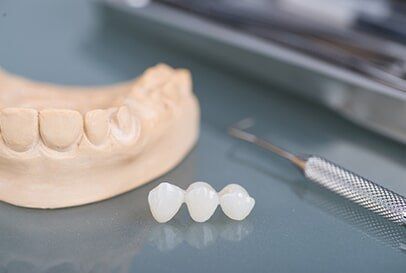
Made up of two or more crowns, bridges replace missing teeth and are supported by natural teeth or implants. A bridge can last five to fifteen years — hopefully more — with proper care. Insurance typically covers a percentage of the fee.
Root Canals
Treatment to repair and save a tooth that is badly decayed or infected — the alternative is extraction. After therapy, a final restoration (filling or crown) completes the tooth. One to four appointments are typically needed, and most insurance covers a percentage of the necessary procedures.
Dentures
Removable false teeth designed to replace missing teeth. Complete dentures are made after all teeth have been removed and gum tissue has healed; partial dentures are supported by remaining healthy teeth. The process takes several appointments over a few weeks. Most dental insurance covers a percentage of the fee.
Scaling & Root Planing
One of the most effective ways to treat gum disease before it becomes severe — a non-surgical deep cleaning between the gums and teeth down to the roots. Local anesthetic is often used to minimize discomfort. Some coverage limitations may apply.